
While 1 in 8 men will be diagnosed with prostate cancer during their lifetime, risk factors for the disease can vary based on the individual’s age, race/ethnicity and family history. For example, prostate cancer is more common in older men, and the average age for a first diagnosis is 67 years old. Black men in the United States and the Caribbean also face a higher risk of developing prostate cancer.
Prostate cancer often grows slowly and may not cause any symptoms in its early stages. However, if you do have symptoms, they may include blood in your urine or semen, the need to urinate more frequently, difficulty when trying to urinate, and waking up to urinate more often at night.
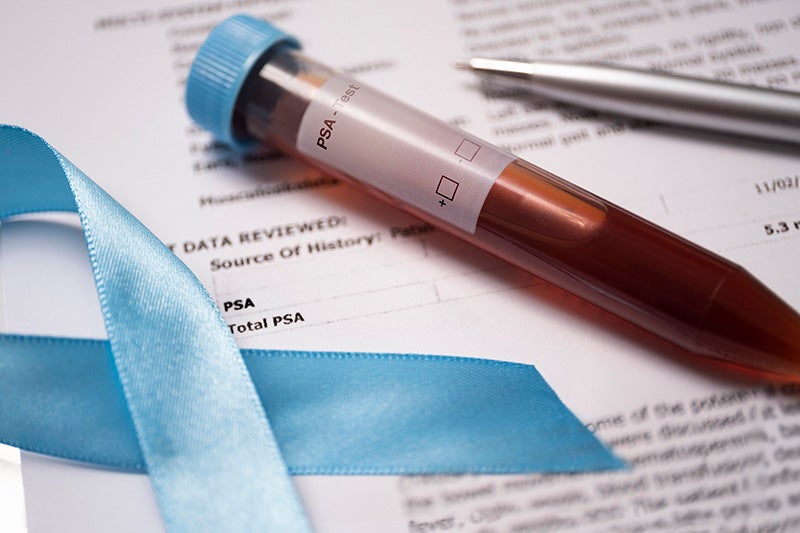
Because it is one of the most common cancers in men, screening for prostate cancer is vital as it can find the disease in its early stages when it is more treatable. For many men, the screening is quite easy and involves a simple blood test to measure the level of a protein in the blood called prostate specific antigen (PSA). Your doctor will review your PSA levels over time and compare your current PSA level with previous test results. An elevated level of PSA may be indicative of the development and growth of prostate cancer – or other non-cancerous conditions such an enlarged prostate, prostatitis, or a urinary tract infection.
It’s a common misconception that screening for prostate cancer also requires a digital rectal exam (DRE). During a DRE, your doctor will use a gloved, lubricated finger to feel the prostate, checking to determine if it is enlarged, has any lumps or is tender. According to the Prostate Cancer Foundation, a DRE is no longer recommended as a standalone screening test for prostate cancer.
The American Cancer Society recommends that men begin talking with their doctor about screening for prostate cancer at age 50. However, your doctor may recommend earlier screening if you are at high risk of developing the disease. Your risk is higher if you are a Black man or if you have one or more first-degree relatives (a father or a brother) diagnosed with prostate cancer before age 65.
Trinity Health Of New England's Men's Health Institute offers a full spectrum of urology services, including access to advanced technologies and treatments, as well as the routine use of minimally invasive urological surgical techniques. You can learn more about the services we provide here.